The Interior Designer's Guide to Neon Art: Elevating Luxury Homes Across South Florida
There was a time when neon belonged to the night — to bar signs and motel marquees, to the electric hum of a boardwalk at dusk. That era is long gone. Today, LED neon fine art occupies a distinct and increasingly coveted position in the world of luxury interior design. In the hands of a skilled designer — or a collector with an adventurous eye — neon art becomes an architectural element as essential as a statement chandelier or a floor-to-ceiling window. It sculpts light. It defines mood. And across South Florida's most beautifully designed homes, from waterfront estates in Fort Lauderdale to sleek Dania Beach condominiums, neon art is proving that luminous sculpture and fine residential design were always meant to share the same room.
Why Interior Designers Are Choosing Neon Art for High-End Residences
The surge of neon art into luxury interiors is not a passing aesthetic fad. It is a natural evolution driven by three converging forces: the maturation of LED neon technology, the growing collector appetite for contemporary art that occupies the intersection of craft and concept, and the particular design sensibility of South Florida itself — a region where light is not merely functional but atmospheric, emotional, and central to the way spaces are experienced.
LED neon art offers designers something that few other mediums can: a piece that fundamentally changes depending on the time of day. In bright afternoon sunlight streaming through a Fort Lauderdale penthouse, a neon sculpture reads as a graphic, color-rich statement — bold lines and vivid hues against a clean wall. At twilight, the same piece begins to assert its glow, casting soft colored light across adjacent surfaces. By evening, it commands the room, transforming the entire spatial atmosphere into something intimate, dramatic, or meditative, depending on the artist's palette and the viewer's mood.
This duality — art by day, ambient architecture by night — makes neon uniquely versatile in residential settings. A canvas painting is always a canvas painting. A neon work is a living thing, responsive to the light that surrounds it.
Room by Room: Where Neon Art Transforms Luxury Interiors
One of the most frequent questions interior designers bring to Lux Neon Art Gallery in Dania Beach is deceptively simple: Where does it go? The honest answer is that neon art can work in virtually any room of a home. But certain spaces unlock its potential in particularly striking ways.
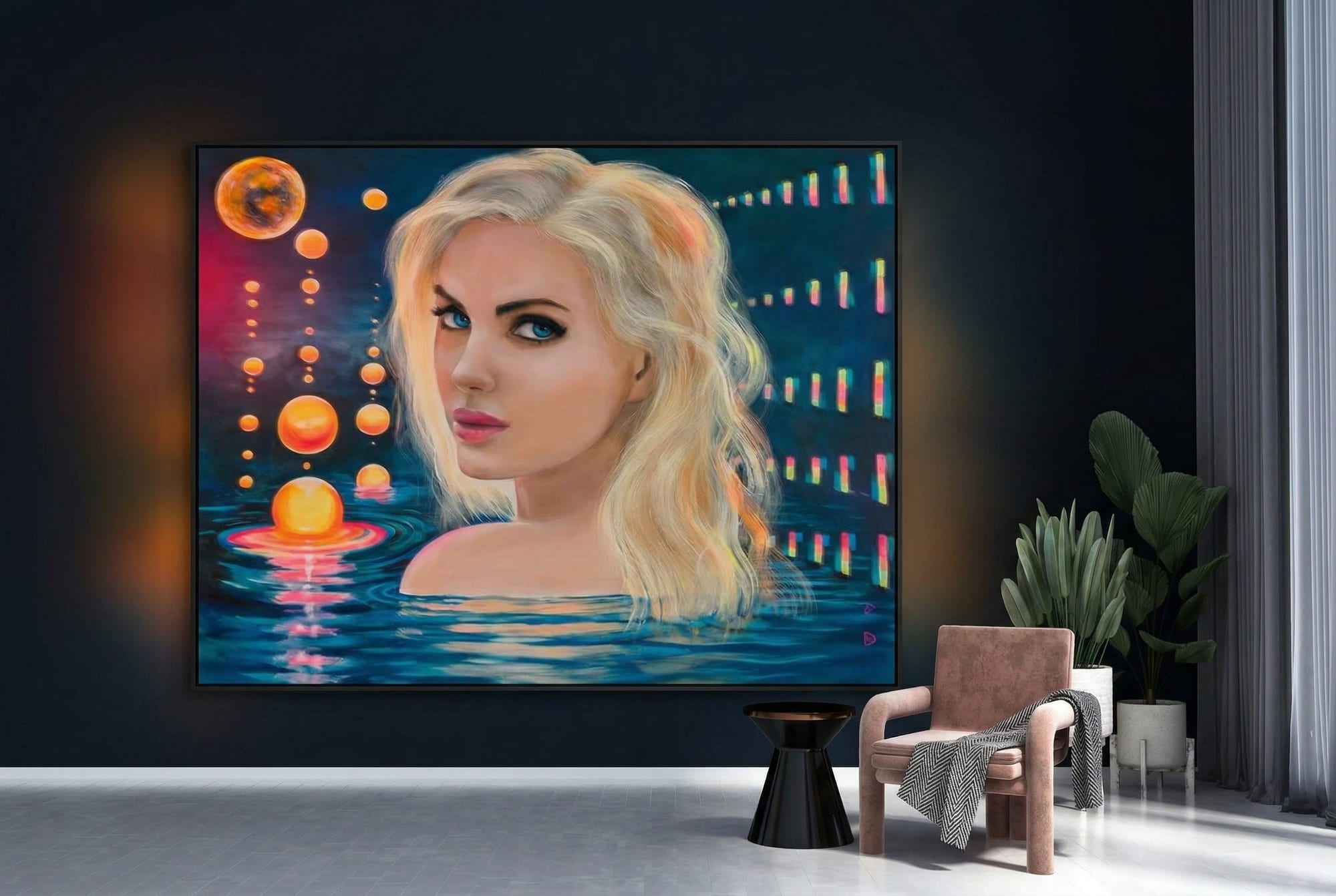
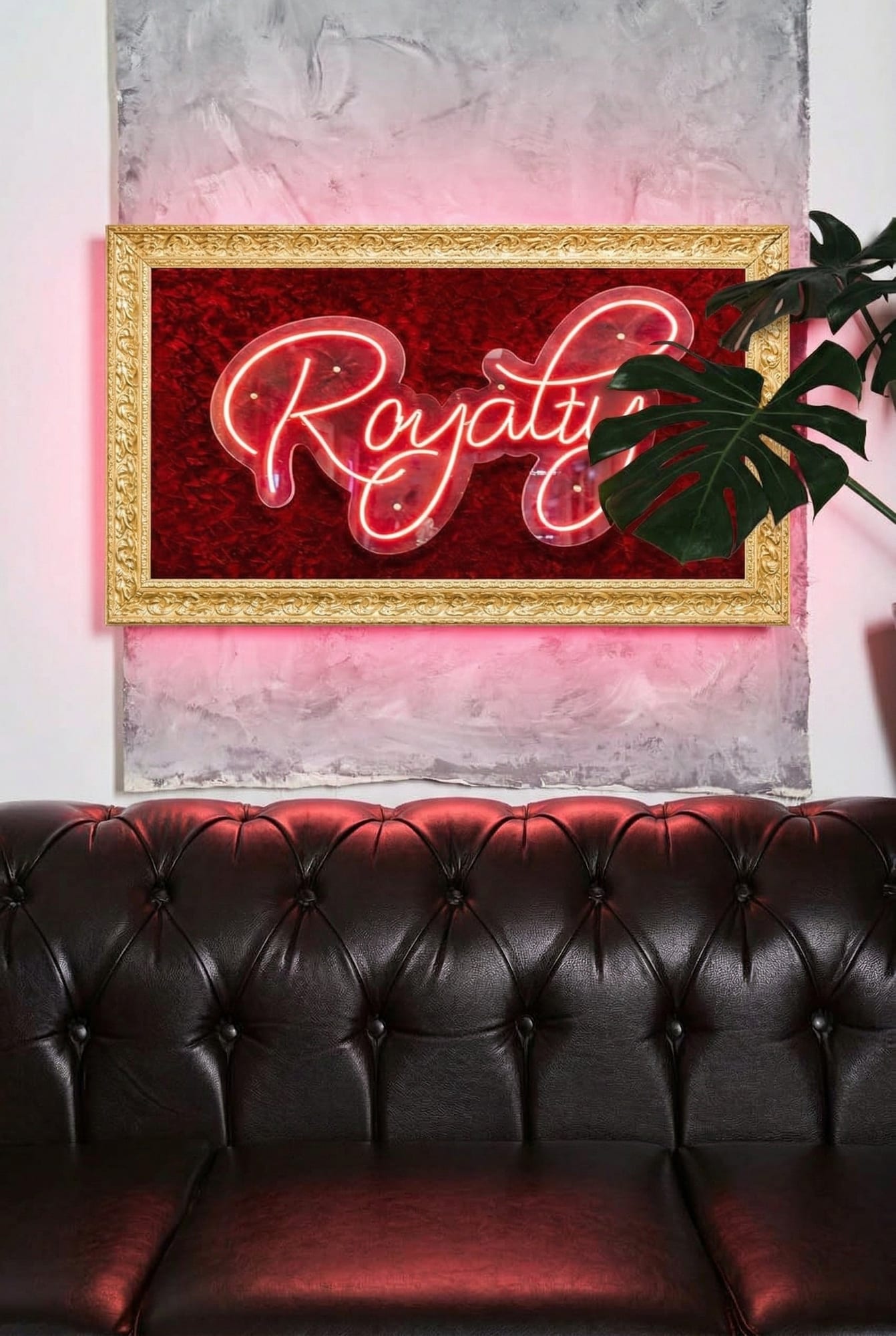
The Living Room and Great Room. This is the natural starting point — the room where guests gather, where first impressions form, and where a homeowner's aesthetic vision is most fully expressed. A large-scale LED neon work above a sofa, flanking a fireplace, or floating on a feature wall becomes the gravitational center of the space. In South Florida's open-plan living areas, where interiors often flow seamlessly into outdoor entertaining spaces, a neon piece creates a visual anchor that draws the eye back indoors even when the ocean view is competing for attention. The key is scale: in a room with twelve-foot ceilings and generous square footage, a neon artwork needs presence. This is where original fine art pieces truly shine — works that were conceived as gallery-scale installations rather than decorative accents.
The Primary Suite. Neon in the bedroom is a subtler proposition, and one that rewards careful curation. The best bedroom installations use softer color temperatures — warm whites, blush pinks, gentle ambers — to create an atmosphere that feels both luxurious and restful. Mounted behind the headboard or on a wall visible from the bed, a neon piece replaces the traditional bedside lamp with something far more evocative. In Fort Lauderdale and Broward County, where many luxury bedrooms feature floor-to-ceiling windows overlooking the Intracoastal or the Atlantic, neon art provides a counterpoint to the natural light — a warm interior glow that makes the room feel like a retreat even after dark.
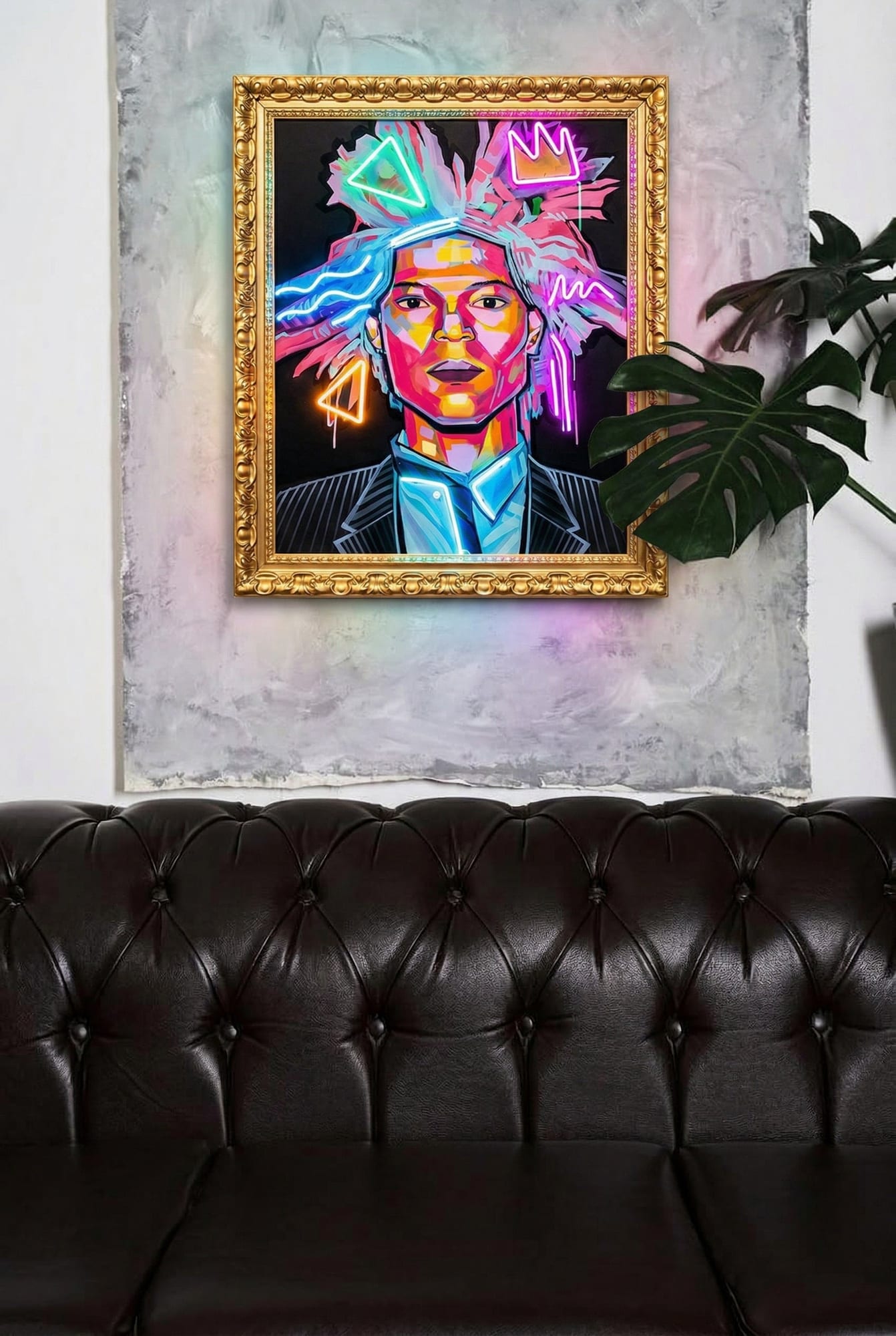
The Home Bar and Entertainment Space. If there is a single room where neon art feels most immediately at home, it is the bar. South Florida's culture of entertaining — the cocktail hours, the dinner parties, the impromptu gatherings that stretch past midnight — demands spaces that perform. A neon installation above a home bar or in a wine room transforms the area into a destination within the home. The art creates atmosphere that no pendant light or recessed can replicate. Lux Neon Art Gallery's collection includes works in the neon pop art and street art traditions that are particularly well-suited to these spirited, social spaces.
The Hallway and Transitional Spaces. Designers too often overlook corridors, landings, and entryways — treating them as connective tissue rather than opportunities. Neon art transforms these transitional spaces into experiences. A sculptural neon piece at the end of a long hallway creates a visual destination. A smaller work in a foyer sets the tone before a guest has even stepped fully inside. In the sprawling layouts typical of South Florida luxury homes, these in-between spaces represent significant square footage — and neon gives them purpose.
The Outdoor Living Area. South Florida living is, by nature, indoor-outdoor. Covered patios, loggias, and lanais are used year-round, and neon art designed for protected outdoor installation brings the gallery experience into these spaces. The interaction between neon light and tropical landscaping — palms silhouetted against a glowing artwork, the reflection of colored light on pool water — creates scenes that feel both curated and effortless. For designers working on waterfront properties in Dania Beach and Fort Lauderdale, outdoor neon installations are becoming a signature element.
Integrating Neon Art Across Design Styles
A persistent misconception about neon art is that it suits only one aesthetic — the ultra-contemporary, the maximalist, the deliberately edgy. In practice, neon art is remarkably adaptable across design vocabularies, provided the selection is thoughtful.
Modern Minimalist. Clean-lined spaces with restrained palettes are perhaps neon's most powerful backdrop. A single neon sculpture on an unadorned white wall becomes the sole focal point — an approach that treats light itself as both medium and subject. Abstract neon works in monochromatic tones (cool white, soft blue, single-line amber) integrate seamlessly into minimalist interiors without disrupting their discipline.
Mid-Century Modern. The organic curves and warm material palette of mid-century design pair beautifully with neon art that emphasizes flowing, sculptural line work. The juxtaposition of walnut and teak against the glow of a neon piece creates a dialogue between analog warmth and electric luminosity that feels both retro and thoroughly contemporary.
Coastal Luxury. South Florida's dominant residential aesthetic — light-filled, natural-material-driven, oriented toward water and sky — might seem an unlikely partner for neon. But the right piece can enhance a coastal palette rather than contradict it. Neon works in ocean blues, seafoam greens, or warm sunset tones complement the coastal vocabulary while adding a layer of artistic sophistication that distinguishes a designed home from a decorated one.
Eclectic and Maximalist. In homes where art collections span multiple periods, mediums, and sensibilities, neon art adds a dimension that no canvas or photograph can: active light. A neon piece alongside a traditional oil painting, a bronze sculpture, and a contemporary photograph creates the kind of layered, conversational collection that interior designers and serious collectors aspire to build.
Practical Considerations: What Designers Need to Know
Beyond aesthetics, integrating neon art into residential design involves practical considerations that benefit from professional guidance — the kind available through gallery consultation at Lux Neon Art Gallery.
Electrical Planning. LED neon art is energy-efficient and runs cool to the touch, a significant advantage over traditional glass neon. Most pieces plug into standard outlets, but high-end installations benefit from dedicated circuits and concealed wiring planned during the construction or renovation phase. Designers working on new builds in Fort Lauderdale and Broward County should plan neon locations early — the same way they plan for sconces or accent lighting — to ensure clean, cord-free presentations.
Dimming and Smart Integration. Many LED neon works are compatible with dimming systems, allowing homeowners to adjust intensity for different occasions. Integration with home automation platforms means a neon piece can be programmed to shift brightness with the time of day, activate with a scene preset, or respond to motion — subtle enhancements that make the art feel like a natural part of the home's rhythm.
Wall Preparation and Mounting. Neon art installations benefit from properly prepared mounting surfaces. A clean, well-painted wall — particularly in darker or more saturated tones — can dramatically enhance the glow effect and create depth behind the piece. Professional mounting ensures the work sits at the correct distance from the wall to maximize its light halo, a detail that distinguishes a gallery-quality installation from a casual hang.
Scale and Proportion. Selecting the right size neon work for a given wall and room is essential. An undersized piece on a large wall loses impact; an oversized work in a confined space can overwhelm. The curatorial team at Lux Neon Art Gallery regularly works with interior designers to recommend pieces from the gallery's collection of over forty-six LED neon fine art works — or to guide the custom commission process when a space calls for something bespoke.
The Custom Commission Advantage for Interior Design Projects
While the gallery's existing collection offers a curated selection of neon art across multiple styles — from abstract and pop art to surrealism and street art — many designers find that a custom neon commission delivers the most precisely integrated result. Custom work allows the piece to be conceived specifically for its intended space: the exact dimensions, color palette, subject matter, and mounting configuration are developed in conversation between the designer, the client, and the gallery's commissioning team.
The process at Lux Neon Art Gallery moves from initial concept through digital mockup to fabrication and installation, with designer input welcomed at every stage. For large-scale residential projects in South Florida — the kind where every element is specified and sourced with intention — custom neon commissions ensure that the art is not merely placed in the home but designed for the home.
Interior designers interested in exploring custom commissions for client projects can reach the gallery directly at (954) 477-2768 to schedule a design consultation.
A Gallery Visit as Part of the Design Process
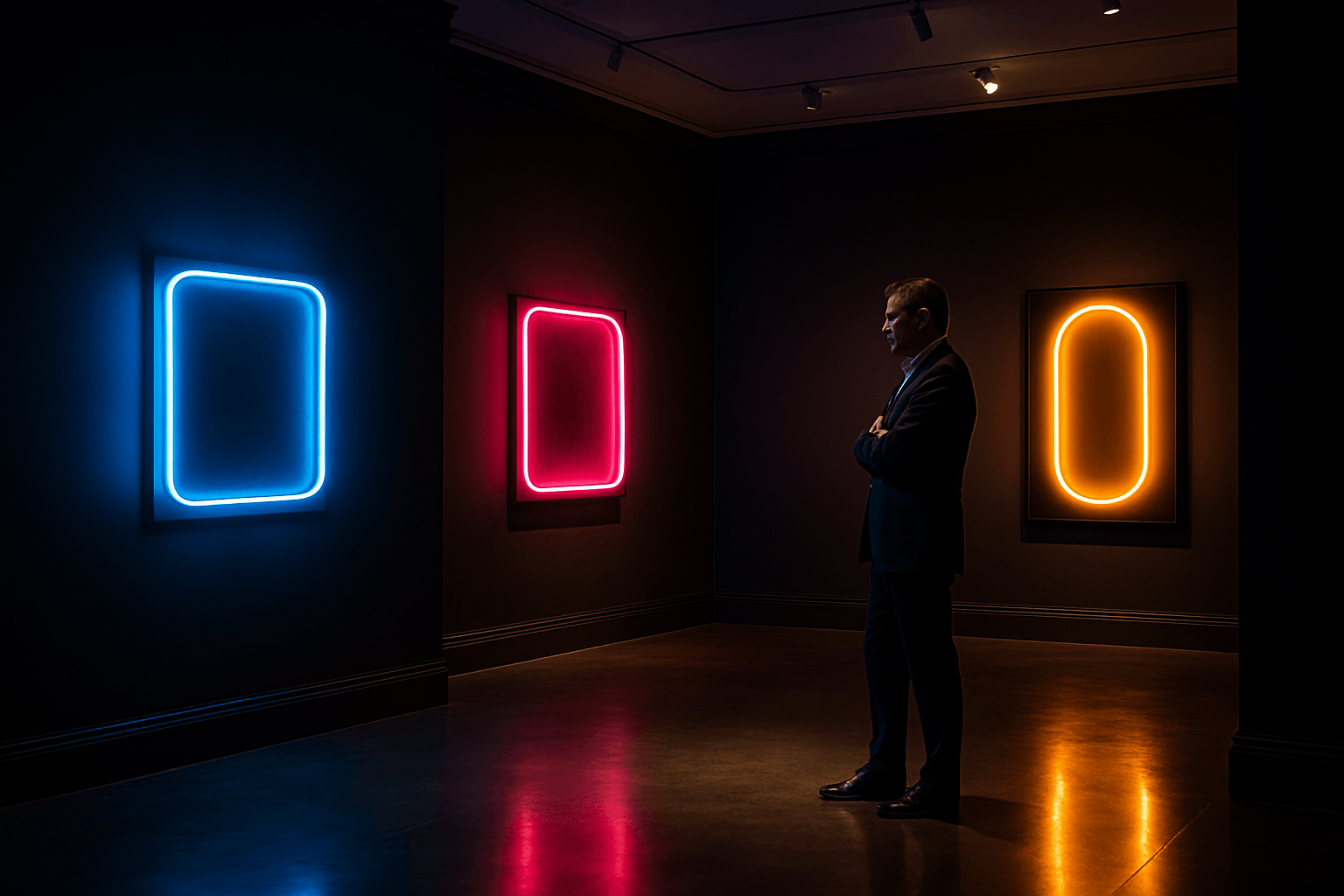
There is no substitute for experiencing neon art in person. Photographs convey form and color, but they cannot replicate the spatial presence of a luminous sculpture — the way it interacts with the surrounding architecture, the way it shifts as you move through the room, the way it changes the quality of light on nearby surfaces. For interior designers and their clients, a visit to Lux Neon Art Gallery in Dania Beach is an essential part of the selection process.
The gallery space itself serves as a living showroom for how neon art functions in designed environments. Works are displayed with curatorial intention, offering visitors the opportunity to see how different scales, styles, and color temperatures interact with walls, ceilings, and ambient light. Private viewings and design consultations are available by appointment for designers working on active projects.
Whether you are a designer specifying art for a new-construction waterfront estate, a collector adding a luminous dimension to a well-established collection, or a homeowner looking for that single transformative piece, Lux Neon Art Gallery invites you to visit, explore, and discover how neon art can elevate the spaces where you live. The gallery is located in Dania Beach, Florida, in the heart of South Florida's Broward County — and the glow is always on.