Why Neon Art Must Be Experienced in Person: The Case for Gallery Visits in Dania Beach
We live in an age of screens. Art arrives on phones, tablets, and monitors — flattened into pixels, compressed into thumbnails, scrolled past in fractions of a second. And for most mediums, the digital experience is a reasonable enough preview. A photograph of a painting gives you the composition. A video walkthrough of a sculpture conveys its shape. But neon art is different. Neon art is fundamentally, stubbornly, gloriously impossible to capture through a screen. To understand why, you need to stand in front of one. And there is no better place to do that in South Florida than a gallery dedicated entirely to the medium.
The Problem with Pixels: Why Screens Flatten the Neon Experience
Consider what happens when you photograph a neon artwork. The camera sensor, no matter how sophisticated, must make decisions about exposure. It can capture the bright tubes or it can capture the ambient glow that radiates into the surrounding space — but it struggles to hold both simultaneously. The result is a competent image that communicates the design but strips away the very quality that makes neon art singular: its presence.
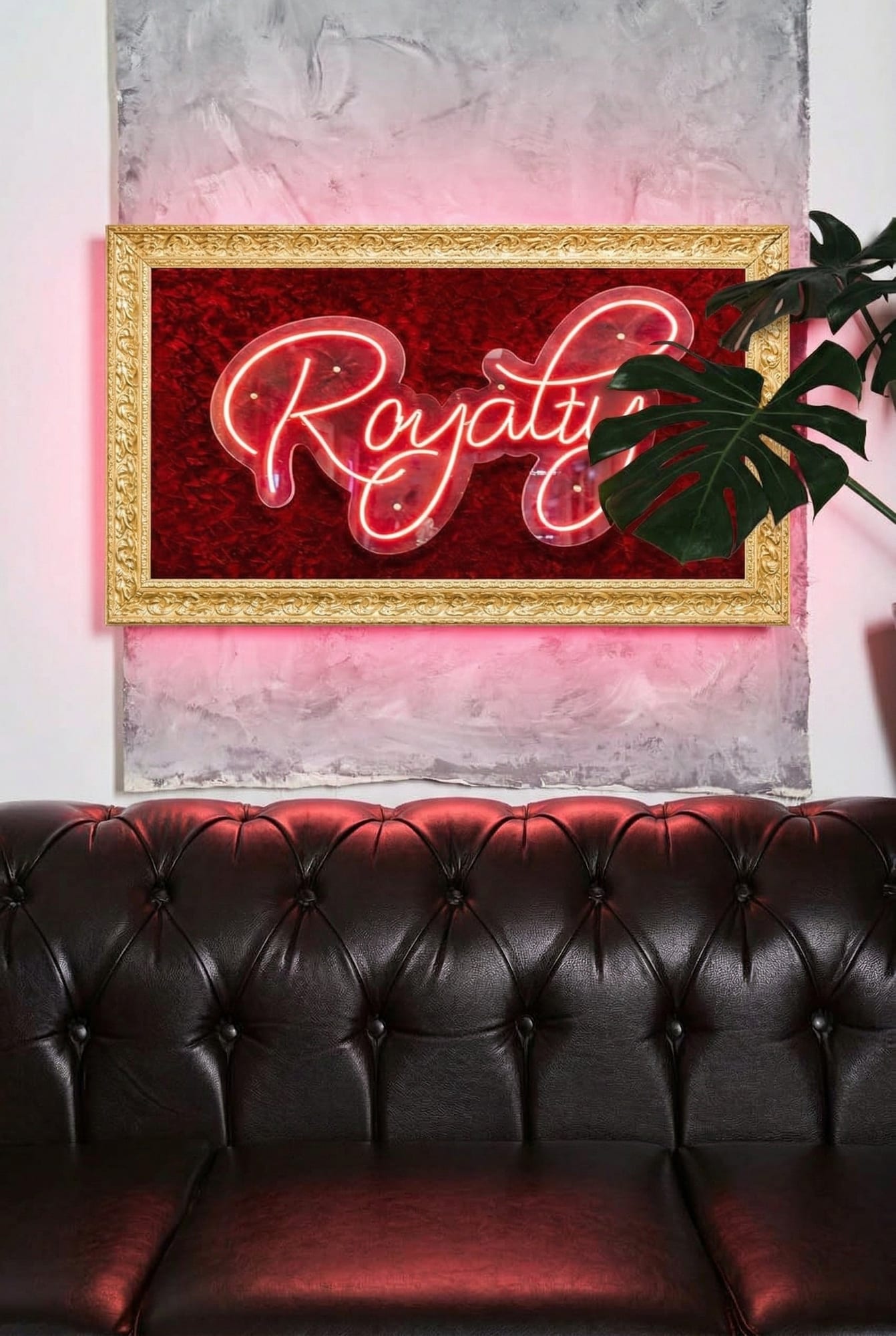
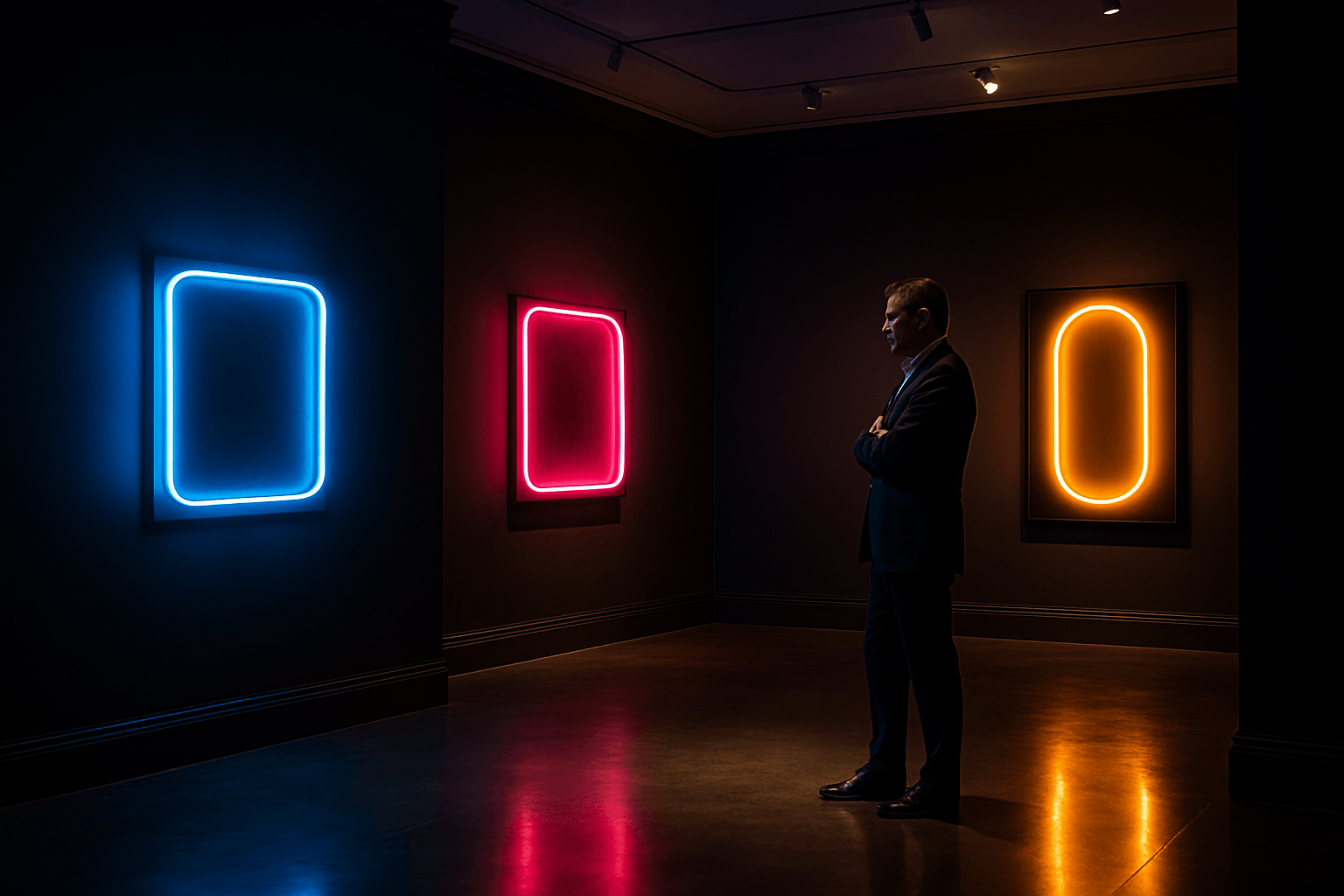
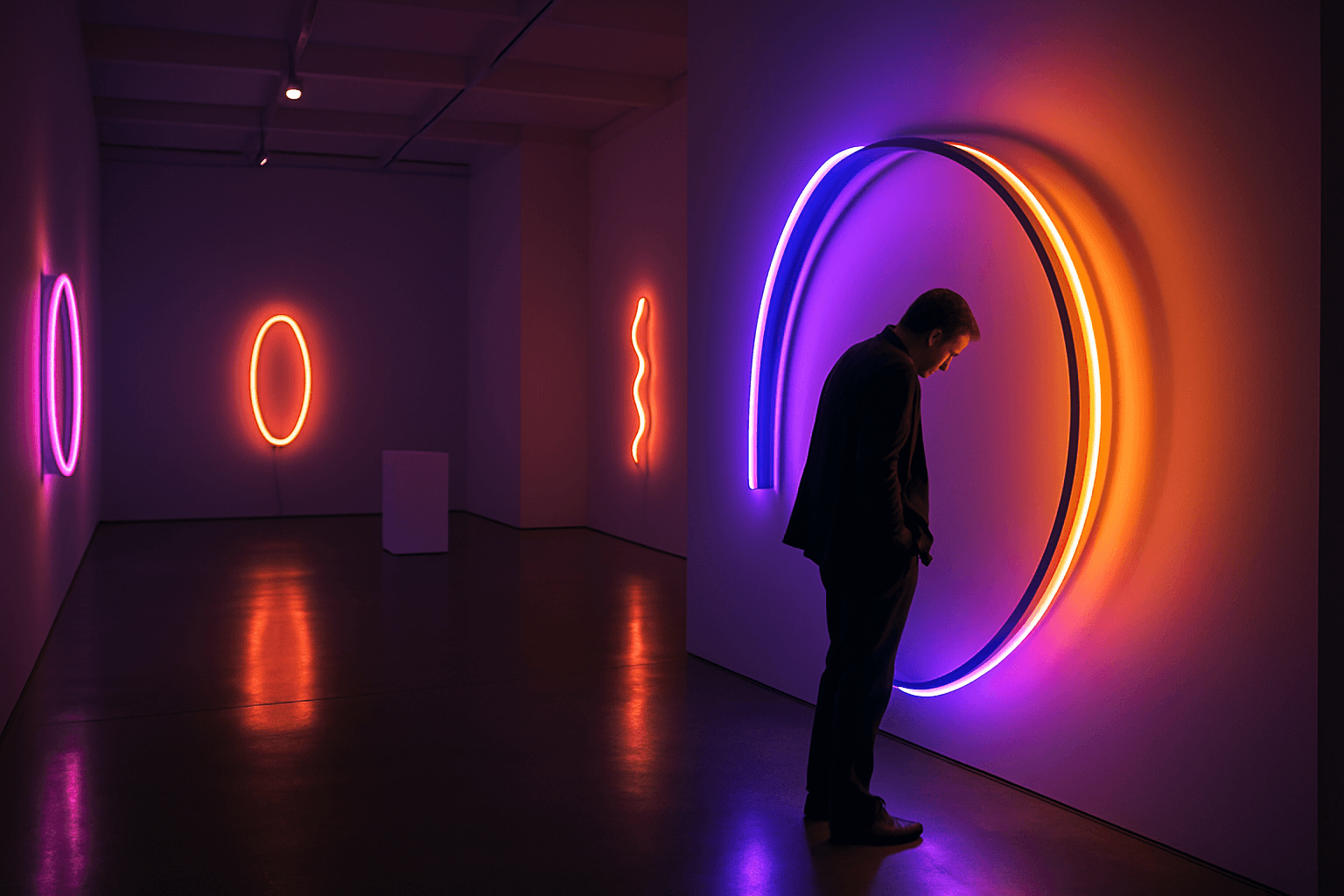
A neon sculpture in a gallery doesn't just hang on a wall. It inhabits the room. It casts colored light across adjacent surfaces, creating gradients that shift as you move. It transforms the wall behind it into a canvas of soft radiance. It alters the way your eyes perceive the other works nearby. A deep cobalt blue neon piece will cool the entire corner of a room, making warm-toned works elsewhere appear richer by contrast. A vivid magenta installation will bathe visitors in rosy light, literally changing how people look to one another. None of this translates to a screen.
This is not a minor aesthetic footnote. It is the entire point. LED neon fine art is a medium of light, and light is a three-dimensional, spatial experience. You cannot shrink a room full of light into a rectangle and expect the truth to survive the compression. This is precisely why galleries exist — and why visiting one in person remains the most important step in understanding, appreciating, and ultimately collecting neon art.
What Happens When You Walk Into a Neon Gallery
The experience of entering a dedicated neon art gallery is unlike visiting any other type of exhibition space. Traditional galleries rely on controlled natural light or carefully positioned track lighting to illuminate works on white walls. A neon gallery inverts this relationship entirely. Here, the art is the light. The works illuminate themselves and, in doing so, illuminate everything around them.
Your eyes adjust. The first thing most visitors notice is a shift in their visual perception — the way the brain recalibrates when surrounded by multiple sources of colored light. Shadows become tinged with unexpected hues. The space between artworks becomes charged with overlapping fields of luminescence. And the works themselves reveal details that no photograph prepared you for: the subtle texture of the backing material, the precise way a glass tube bends at an acute angle, the almost imperceptible flicker that gives LED neon its particular living quality.
In Dania Beach, this experience is amplified by the surrounding context. South Florida's natural light — that particular coastal brightness that shifts between the gold of morning and the theatrical amber of late afternoon — creates a dialogue with the gallery's interior glow. Visitors who arrive during golden hour often find that the transition from the warm Florida sun to the cool, curated light of a neon gallery is itself a kind of art experience, a threshold between two worlds of illumination.
The Social Dimension: Art and Wine Events in Fort Lauderdale
Galleries have always been social spaces, but neon art galleries occupy a uniquely compelling niche in South Florida's cultural calendar. The visual drama of neon — its inherent photogenic quality, its ability to transform a room into something that feels like an event simply by existing — makes these spaces natural gathering points for Fort Lauderdale's creative community.
Art and wine evenings have become a signature of the Broward County gallery scene, and neon art provides the perfect atmospheric backdrop. Imagine standing with a glass of wine in a room where the walls pulse with soft, luminous color — where the art doesn't just decorate the space but actively shapes the mood of the conversation. These events draw collectors, interior designers, architects, hospitality professionals, and art enthusiasts who share an appreciation for work that blurs the line between fine art and environment.
Private viewings offer an even more intimate encounter. By appointment, collectors can spend unhurried time with individual pieces, viewing them in different lighting conditions, discussing the creative process behind a particular work, and understanding how a piece might integrate into their own space. This kind of thoughtful, personal engagement is the foundation of serious art collecting, and it simply cannot be replicated by browsing an online catalogue.
For those exploring the South Florida art scene, these gallery events represent one of the most accessible entry points into the world of contemporary neon art. Whether you are a seasoned collector expanding into a new medium or a curious newcomer drawn by the glow, the invitation is always open: come see the work in person. Let the light change your mind about what art can do to a room.
Touch, Scale, and Surprise: What You Discover in Person
There are three revelations that consistently surprise first-time gallery visitors encountering neon art face to face.
The first is scale. Product photographs and online listings communicate dimensions in numbers — 36 by 48 inches, for example — but numbers are abstractions. Standing before a large-format neon piece and feeling its light wash across your body is a fundamentally different experience from reading its measurements. Many collectors discover that the piece they assumed would be a subtle accent actually commands an entire wall, while a work they worried might overwhelm a space turns out to possess a delicacy that photographs entirely failed to convey.
The second revelation is depth. Neon art is not flat. The tubes or LED strips that form the illuminated elements sit at varying distances from the backing surface, creating layers of light and shadow. In person, as you shift your position, these layers interact differently. A work that appears to be a single plane of color from directly in front reveals itself as a sculptural composition when viewed from an angle. This dimensionality — this quality of changing as you change your relationship to it — is one of neon art's most compelling characteristics, and it is entirely invisible in two-dimensional reproductions.
The third surprise is silence. Visitors who associate neon with the buzzing signs of old frequently arrive expecting a hum or a crackle. Modern LED neon art is virtually silent. The glow emanates without sound, creating a meditative quality that transforms the gallery visit into something more contemplative than many expect. It is an experience closer to visiting a chapel than a nightclub — luminous, quiet, enveloping.
Planning Your Gallery Visit: What to Know Before You Go
If you are considering your first visit to a neon art gallery in Dania Beach or the greater Fort Lauderdale area, a few practical notes will enhance the experience.
Timing matters. Gallery visits during different times of day offer meaningfully different encounters with the work. Morning visits, when natural light filters in from outside, reveal how neon art coexists with daylight — an important consideration for collectors planning to display work in sun-filled rooms. Evening visits showcase the full dramatic impact of neon in darkness, when each piece becomes the dominant light source in its vicinity.
Bring your space in mind. If you are considering a piece for a specific location — a living room wall, a restaurant entrance, a boutique hotel lobby — bring photographs or measurements of the space. Gallery staff and consultants can help you visualize how a particular work will interact with your existing architecture and lighting. This is one of the great advantages of visiting a physical gallery: the conversation that happens between your vision for a space and the expertise of people who work with neon art daily.
Ask about custom commissions. Gallery visits are also the ideal moment to discuss bespoke work. The custom neon commission process begins with a conversation — about your aesthetic preferences, the intended space, the mood you want to create. Seeing the range of existing work in a gallery gives you a vocabulary for that conversation. You can point to a particular shade of light and say, "That blue." You can gesture at a bending technique and say, "That curve." These specifics, born from direct observation, lead to commissions that are more precise and more personal than anything initiated by email alone.
Appointments are welcome. While gallery hours offer a wonderful drop-in experience, scheduling a private viewing ensures dedicated time and attention. Call (954) 477-2768 to arrange a visit tailored to your interests — whether you are exploring neon art for the first time, seeking a specific piece for a project, or ready to begin the custom commission process.
South Florida's Growing Appetite for Experiential Art
The rise of neon art galleries in Broward County reflects a broader shift in how South Floridians engage with contemporary art. There is a growing hunger for art experiences that are immersive, multi-sensory, and impossible to replicate digitally. In a region where hospitality, design, and creative culture intersect daily, neon art has emerged as a medium that speaks to all three simultaneously.
Dania Beach, with its evolving identity as a creative destination along the South Florida coast, has become an increasingly compelling location for art discovery. Situated between Fort Lauderdale and Hollywood, it offers the kind of intimate, community-scaled gallery experience that can get lost in larger art fair circuits. For visitors and locals alike, a gallery visit here is not a massive, exhausting art marathon — it is a focused, personal encounter with work that demands to be seen in the light it creates for itself.
This is what makes neon art, and the galleries that house it, so essential to the current moment. In a cultural landscape saturated with digital images, the physical gallery offers something radical: an experience that cannot be streamed, saved, or shared with full fidelity. You have to be there. The light has to touch you. And once it does, you understand why collectors, designers, and art lovers across South Florida keep coming back.
Visit Lux Neon Art Gallery
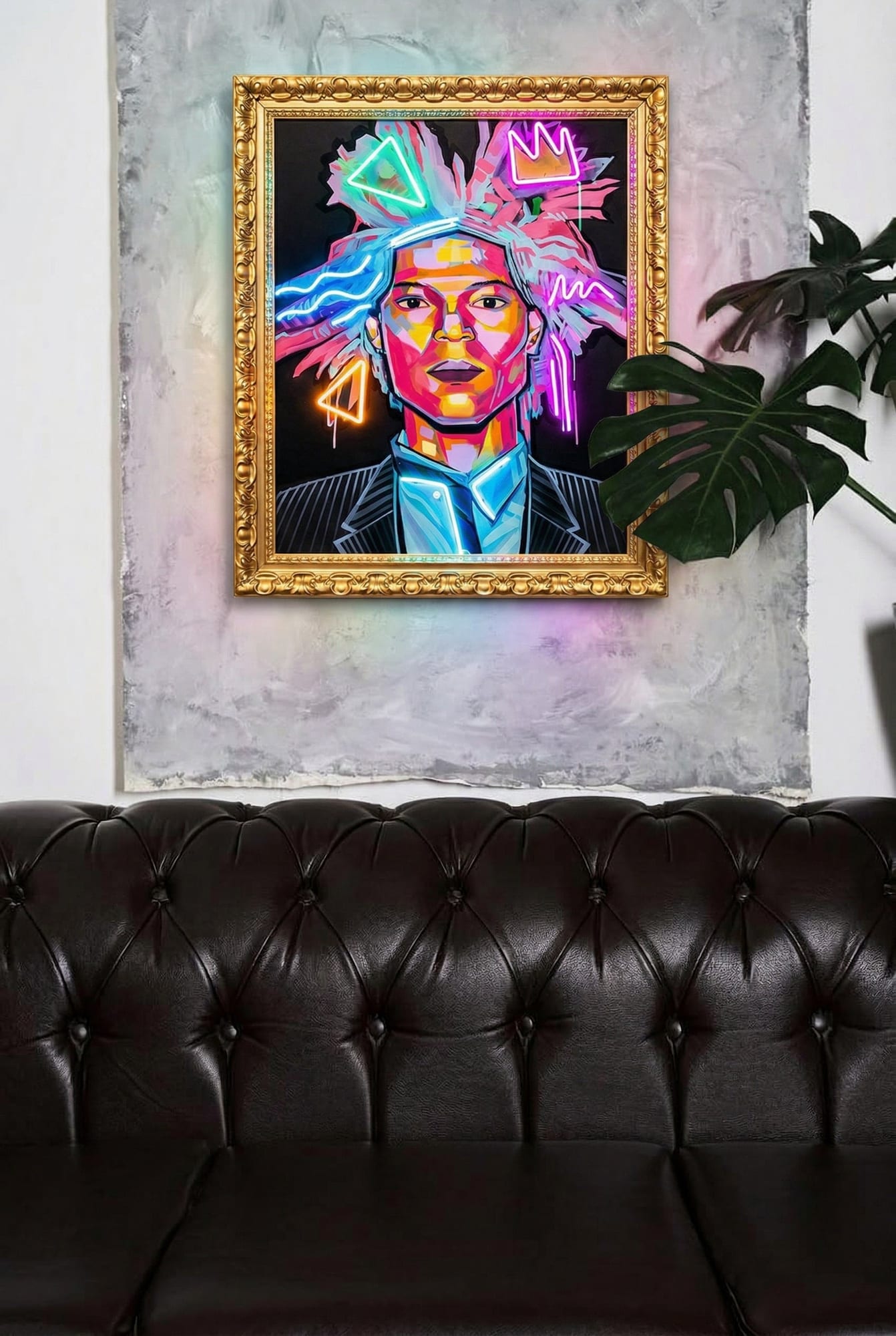
Located in the heart of Dania Beach, Lux Neon Art Gallery is South Florida's premier destination for LED neon fine art, original contemporary works, sculptures, and custom neon commissions. Our collection spans neon pop art, abstract neon, street art, surrealism, and more — with pieces ranging from intimate works perfect for private residences to large-scale installations designed for commercial and hospitality spaces.
We invite you to experience the collection in person. Browse during gallery hours, schedule a private viewing, or join us for our next Art and Wine event. Whether you are a collector, an interior designer sourcing for a project, or someone who simply wants to see what neon art feels like when it surrounds you, the gallery doors are open.
Call us at (954) 477-2768 or visit luxneonartgallery.com to plan your visit. Come see what light can do.